


Pavement Ant Removal Toronto, Proven 24/7 Licensed Exterminators
Saba Pest Control provides guaranteed pavement ant removal Toronto homeowners trust. Complete colony elimination with a written warranty. MECP licensed with 24/7 emergency response in 30 minutes.
Signs You Need Pavement Ant Removal Toronto Services
Small Sandy Mounds Between Pavement Cracks
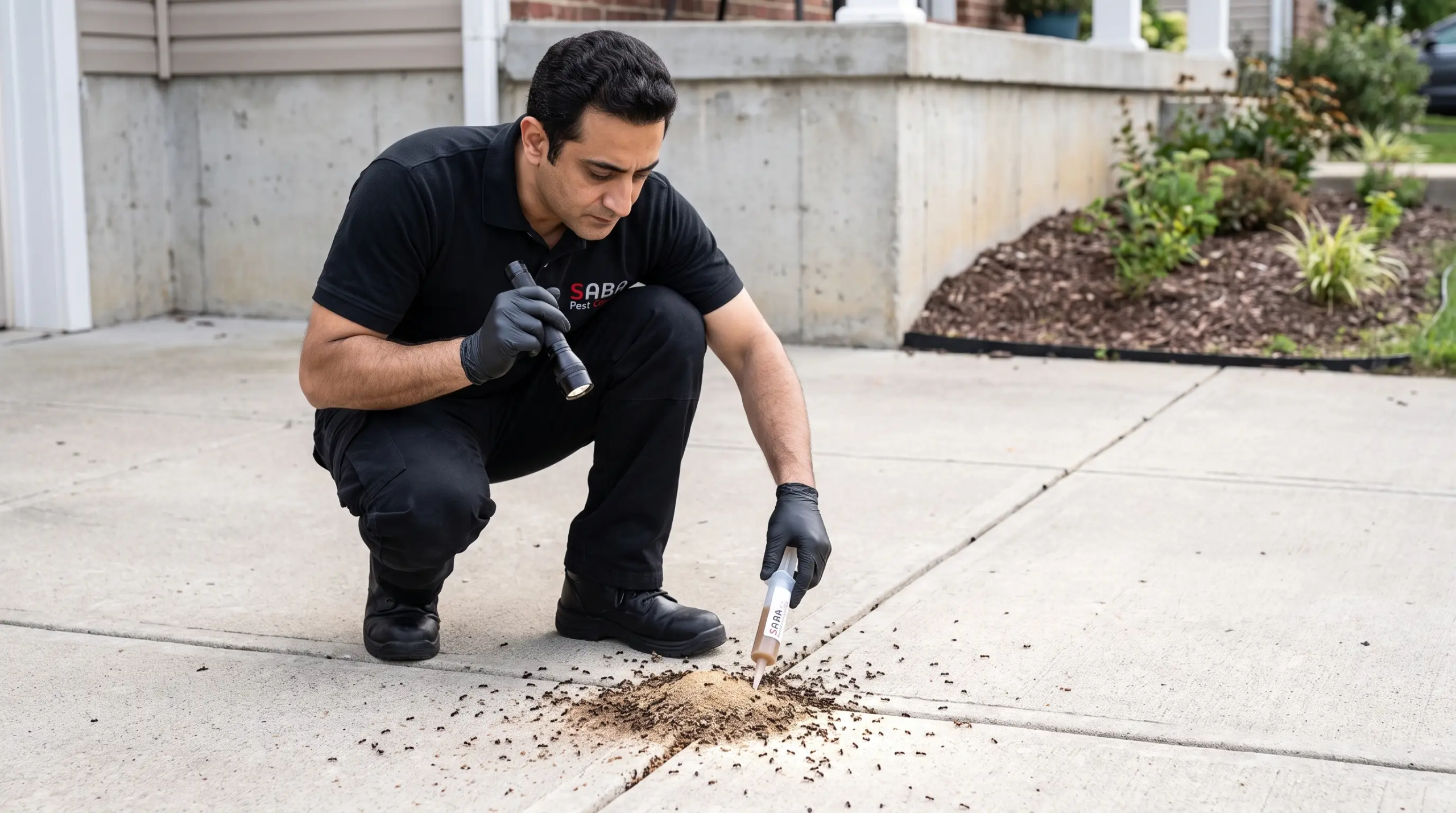
Fine sandy soil mounds pushed up between driveway expansion joints, sidewalk cracks, patio gaps, and along foundation edges are the signature sign of pavement ants actively excavating colonies directly beneath your concrete surfaces.
Ant Trails Along Foundation and Baseboards
Pavement ant foraging trails running along the exterior base of your foundation wall, through weep holes, and along interior baseboards toward your kitchen indicate an established colony beneath your foundation actively foraging inside your home.
Ants Found Near Greasy and Sweet Food Sources
Pavement ants foraging around kitchen appliances, near garbage bins, on counters with food residue, and around pet food bowls indicate they have established a foraging route inside your home from a colony nesting beneath your foundation or driveway.
Large Ant Battles on Driveways and Sidewalks
Large aggressive battles between two groups of ants on your driveway or sidewalk in spring and early summer are neighbouring pavement ant colonies fighting over territory — a sign of a large established population beneath your property.
What Is Pavement Ant Removal Toronto and Why Does It Matter
Pavement ant removal Toronto homeowners need starts the moment small sandy mounds appear between sidewalk cracks, driveway expansion joints, and foundation gaps. Pavement ants are one of the most common ant species across Toronto and the GTA measuring only 2.5 to 3mm with a dark brown to black body and parallel grooves visible on their head and thorax under magnification. They nest under concrete slabs, sidewalks, driveways, patios, and along foundation walls pushing fine soil and debris up through cracks as they excavate their galleries below. Pavement ant colonies contain up to 5,000 workers and multiple queens making them extremely difficult to eliminate without targeting the colony directly. They forage indoors through foundation gaps seeking greasy and sweet food sources in kitchens and pantries from spring through fall. Professional gel baiting and perimeter treatment by a licensed technician is the only proven method to eliminate the entire colony including all queens permanently.
Ant Removal
Ant Removal Toronto, Proven 24/7 Licensed Exterminators Saba Pest Control provides guaranteed ant removal Toronto homeowners and businesses trust. Complete colony elimination with a written warranty. MECP licensed with 24/7 emergency response in 30 minutes. Call NOW Free Quote skip render: ucaddon_google_reviews Signs You Need Ant Removal Toronto Services Visible Ant Trails in Kitchen or […]
Carpenter Ant Removal
Carpenter Ant Removal Toronto, Proven 24/7 Licensed Exterminators Saba Pest Control provides guaranteed carpenter ant removal Toronto homeowners trust. Complete colony elimination with a written warranty. MECP licensed with 24/7 emergency response in 30 minutes. Call NOW Free Quote skip render: ucaddon_google_reviews Signs You Need Carpenter Ant Removal Toronto Services Sawdust Piles Near Wood Structures […]
Pavement Ant Removal
Pavement Ant Removal Toronto, Proven 24/7 Licensed Exterminators Saba Pest Control provides guaranteed pavement ant removal Toronto homeowners trust. Complete colony elimination with a written warranty. MECP licensed with 24/7 emergency response in 30 minutes. Call NOW Free Quote skip render: ucaddon_google_reviews Signs You Need Pavement Ant Removal Toronto Services Small Sandy Mounds Between Pavement […]
Pharaoh Ant Removal
Pharaoh Ant Removal Toronto, Proven 24/7 Licensed Exterminators Saba Pest Control provides guaranteed pharaoh ant removal Toronto homeowners and businesses trust. Complete colony elimination with a written warranty. MECP licensed with 24/7 emergency response in 30 minutes. Call NOW Free Quote skip render: ucaddon_google_reviews Signs You Need Pharaoh Ant Removal Toronto Services Tiny Yellow Ants […]
Why do I have so many pavement ants in my Toronto driveway every spring?
Pavement ants become most active in spring as soil temperatures rise and colonies expand after winter. The fine sandy mounds that appear between driveway cracks and sidewalk joints in spring are the most visible sign of colonies that have been established beneath your concrete surfaces throughout the previous year. Toronto’s aging concrete infrastructure with numerous cracks and expansion joints provides ideal nesting conditions for pavement ant colonies across all neighbourhoods.
Do pavement ants cause damage to my driveway or foundation?
Pavement ants do not directly damage concrete but their extensive excavation beneath slabs can contribute to settling and cracking over time by removing soil that supports the concrete above. More importantly their colonies nesting directly against your foundation create a persistent indoor foraging pressure that is difficult to eliminate without treating the colony directly rather than just the foraging workers inside.
Why do store bought ant sprays not work on pavement ants?
Store bought contact sprays kill the foraging workers you see on the surface but have no effect on the colony queens and brood living deep beneath your concrete slab. Spraying the trail also disrupts the scent path and causes the colony to establish new foraging routes to different areas of your home making the infestation spread further. Professional gel baiting places attractive bait directly on active trails so workers carry it back to feed the queens eliminating the entire colony at the source.
When is pavement ant season in Toronto?
Pavement ants are most active in Toronto from April through September with peak foraging activity in May and June. Winged reproductive swarmers emerge in late spring and early summer to establish new colonies. However pavement ant colonies remain active year round beneath heated structures and concrete slabs making indoor foraging a problem in any season when food sources are accessible.
