
Cloth Moth Removal Toronto, Proven 24/7 Licensed Exterminators

Saba Pest Control provides guaranteed cloth moth removal Toronto homeowners trust. Complete elimination with a written warranty. MECP licensed with 24/7 emergency response in 30 minutes.

Reviews
5
(136)

Signs You Need Cloth Moth Removal Toronto Services

Irregular Holes in Wool and Natural Fabric

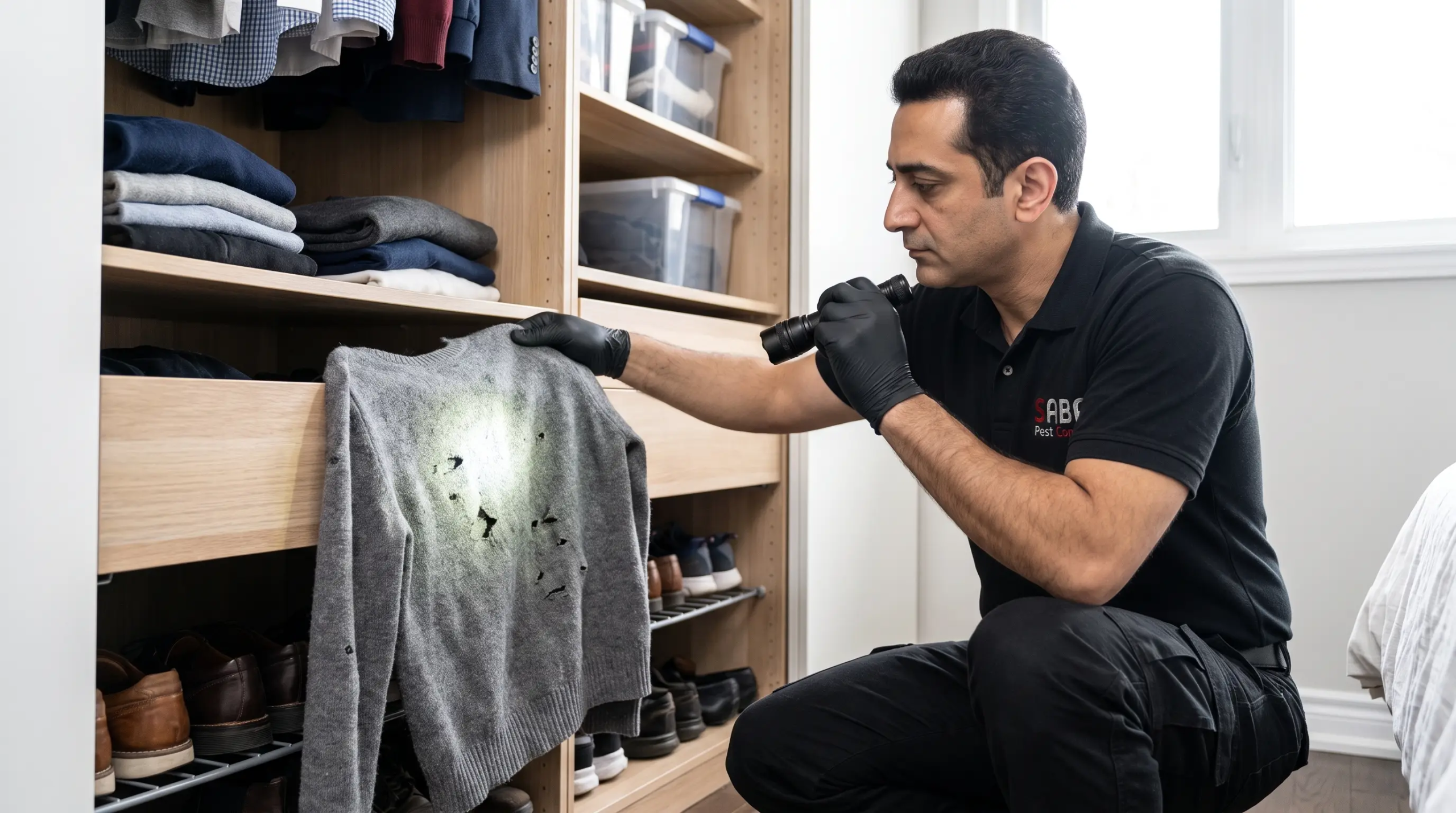
Irregular ragged holes appearing in wool sweaters, cashmere, silk blouses, fur coats, and natural fibre rugs stored in closets and drawers are the most common and devastating sign of clothes moth larvae actively feeding on keratin in your natural fibre garments.

Silk Cases or Tubes on Fabric Surfaces

Small silky tubes or portable cases constructed from fabric fibres attached to the surface of wool rugs, upholstered furniture, and stored garments are the protective cases casemaking clothes moth larvae build around themselves while feeding and indicate an active infestation requiring immediate treatment.

Cream Coloured Larvae in Closets and Drawers

Tiny cream coloured caterpillar-like larvae with a dark brown head found on closet shelves, inside garment storage boxes, along the edges of wool rugs, and in the folds of stored natural fibre clothing are clothes moth larvae causing the actual damage to your garments and textiles.

Damage Concentrated in Dark Undisturbed Areas

Clothes moth damage that is concentrated in areas of garments that are folded, compressed, or in contact with other fabric under collars, inside sleeve folds, along hem edges, and in areas stained with perspiration or food confirms clothes moth larvae as the cause rather than other fabric damage sources.

Cloth Moth Removal Toronto

What Is Cloth Moth Removal Toronto and Why Does It Matter

Cloth moth removal Toronto homeowners need starts the moment irregular holes appear in wool, cashmere, silk, or fur garments stored in closets and drawers. The webbing clothes moth and the casemaking clothes moth are the two species responsible for fabric damage across Toronto and GTA homes. Webbing clothes moths are the most common measuring 6 to 8mm with uniform golden buff coloured wings and a tuft of reddish golden hairs on their head. Casemaking clothes moths are similar in size but carry a portable silken case constructed from fabric fibres as they feed. Unlike Indian meal moths clothes moths actively avoid light and are rarely seen flying making them extremely difficult to detect until significant damage has already occurred. Clothes moth larvae feed exclusively on keratin the protein found in natural animal fibres including wool, cashmere, silk, angora, mohair, fur, feathers, and leather. Synthetic fabrics are completely immune but any blended fabric containing a percentage of natural fibre is at risk. A single clothes moth infestation left untreated can destroy an entire wardrobe of natural fibre clothing, valuable wool rugs, and upholstered furniture over multiple seasons.

Cloth Moth Removal Toronto

Cloth Moth Removal

Cloth Moth Removal Toronto, Proven 24/7 Licensed Exterminators Saba Pest Control provides guaranteed cloth moth removal Toronto homeowners trust. Complete elimination with a written warranty. MECP licensed with 24/7 emergency response in 30 minutes. Call NOW Free Quote skip render: ucaddon_google_reviews Signs You Need Cloth Moth Removal Toronto Services Irregular Holes in Wool and Natural […]

Indian Meal Moth Removal Toronto

Indian Meal Moth Removal

Indian Meal Moth Removal Toronto, Proven 24/7 Licensed Exterminators Saba Pest Control provides guaranteed Indian meal moth removal Toronto homeowners and businesses trust. Complete elimination with a written warranty. MECP licensed with 24/7 emergency response in 30 minutes. Call NOW Free Quote skip render: ucaddon_google_reviews Signs You Need Indian Meal Moth Removal Toronto Services Small […]

Moth Removal

Moth Removal

Moth Removal Toronto, Proven 24/7 Licensed Exterminators Saba Pest Control provides guaranteed moth removal Toronto homeowners trust. Complete elimination with a written warranty. MECP licensed with 24/7 emergency response in 30 minutes. Call NOW Free Quote skip render: ucaddon_google_reviews Signs You Need Moth Removal Toronto Services Irregular Holes in Wool and Natural Fabrics Irregular holes […]
Clothes moths are most commonly introduced into Toronto homes through second hand clothing purchased at thrift stores and vintage shops, antique wool rugs and tapestries, inherited natural fibre textiles, vintage upholstered furniture, and natural fibre items received as gifts. They can also enter through open windows and doors in summer attracted by natural fibre items near entry points. Inspecting all second hand natural fibre purchases carefully before bringing them inside is the most effective prevention measure.

Clothes moths have nothing to do with cleanliness. They are attracted exclusively to natural animal fibres and are found equally in clean and untidy homes. However clothes moths strongly prefer soiled natural fibres stained with perspiration, food, and body oils as these provide additional protein that accelerates larval development. Dry cleaning or washing all natural fibre garments before long term storage removes these attractants and significantly reduces clothes moth risk.

Dry cleaning kills all life stages of clothes moths on individual garments and is an essential part of any clothes moth treatment program. However dry cleaning alone does not treat the closet, shelving, carpet edges, upholstered furniture, and wall voids where eggs and larvae are also present throughout the infested area. Professional treatment of the entire affected area combined with dry cleaning of all natural fibre items is required to fully eliminate an established infestation.

Store all clean natural fibre garments in sealed airtight garment bags or storage containers. Cedar blocks and lavender sachets provide mild deterrent properties but are not effective against an established infestation. Avoid storing natural fibre items in cardboard boxes which clothes moths can penetrate easily. Our technicians recommend professional treatment of the affected area combined with airtight sealed storage for all natural fibre items as the most effective long term prevention strategy for Toronto homeowners.